About Anna Warwick Sears

Anna Warwick Sears is the Executive Director of the Okanagan Basin Water Board, a local government agency focused on collaborative water resource management in the arid interior of B.C. Dr. Sears received a PhD in population biology at the University of California – Davis, modeling competition for resources in arid environments. Before coming to the Okanagan in 2006, Anna was the Research Director of the Laguna de Santa Rosa Foundation, an environmental NGO in California, leading watershed restoration and planning initiatives. Anna is passionate about using science to solve real-world problems and building bridges with community stakeholders. In her free time, she likes to explore the food and wine of the Okanagan valley. She lives in Kelowna.

Think globally – get insurance locally

“…and chaos in the elements. The temperatures unbalanced, grand snow mountains – hard firm glaciers – will melt and disappear. Rivers and lakes becoming scarce …” – Tibetan poem on global warming

The weather is changing globally, but it’s the sewer backed-up that will bring climate change home to many Canadians.

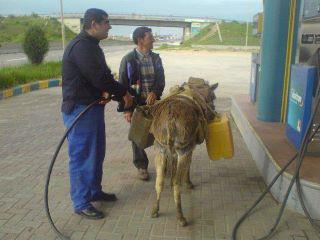
Refueling the donkey - posted on Facebook.

Lately, I’ve been struggling with the implications and magnitude of global warming. It’s hard to absorb something this vast, although I know it’s important to make a shift in the scale of my perspective.

Sea level change is a good example. Tides are rising because of simple physics: global temperatures are rising, water expands as it gets warmer, and melting ice caps grow the pool. It’s dramatic but totally predictable. Coastal communities are weighing options for higher dikes, raising homes on stilts, or relocating neighbourhoods. The island nation of Kiribati is considering a move to Fiji.

This is big. Continue reading

Share

Eating our water: no place for complacency on World Water Day

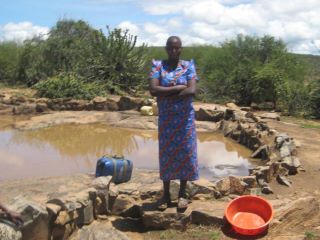
By 2025, 1.8 billion people will be living in countries or regions with absolute water scarcity, and two-thirds of the world’s population could be living under water stressed conditions. The lack of water limits farmers’ ability to produce enough food to eat or earn a living.” – UN World Water Day 2012 website

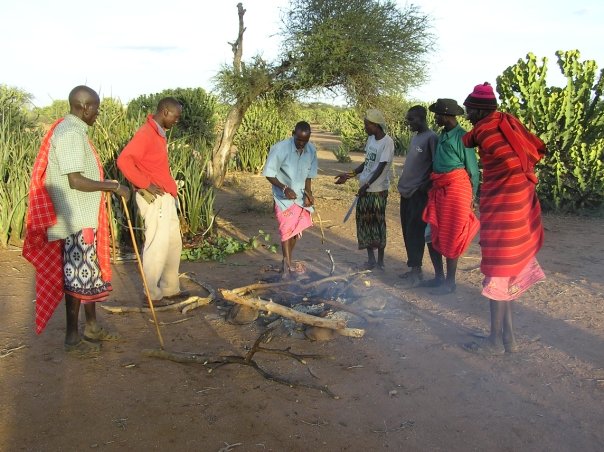
One man roasting a goat, six others giving direction. Borrowed from Lizzie King, who has spent many years studying rangeland restoration with the Maasai of Kenya.

Water and Food Security is the theme of World Water Day – March 22nd, 2012. Every food crop, all meat production, and inland fisheries from Amsterdam to Zanzibar depend on water.

Here, food security once meant the annual migration of millions of sockeye, traveling up the Okanagan River. Fish, wild berries, and game were reliable food for Okanagan peoples for millennia. Now, with 300,000 people in the valley, food security is (like most other places) mostly about land and irrigation water. Continue reading

Share

Of toilets and bird sanctuaries: diversions in the water cycle

Any sufficiently advanced technology is indistinguishable from magic.” – Arthur C. Clarke

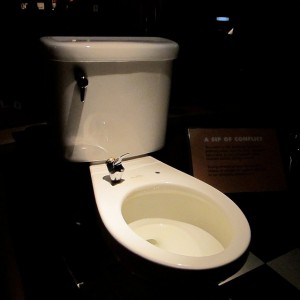
At the San Francisco Exploratorium there is a drinking fountain made from a toilet. It’s a brand new toilet, fed by the cold, pure waters of the California coast range, yet oddly disturbing. Would you bend your head and take refreshment?

Toilet drinking fountain

It's eerily disturbing to see a drinking fountain made from a toilet.

Modern plumbing must be somewhere near the apex of civilization, carrying away everything smelly and unclean, and freeing us from water-borne disease. Stuff just goes away and we don’t give it another thought. “Water is the universal solvent” my chemistry teacher said.

But water and waste don’t really go away. For much of the world it’s a good rule of thumb to live upstream. Here in Canada, we have the high technology to clean and polish our effluent, and voilà, it’s ready for “recycling”. I’m quite in awe of this process: huge volumes, unusual innovations, and bursts of controversy. Continue reading

Share

Everything you wanted to know about watershed governance

The need for collaboration is especially clear for water. Few things are so intimately linked with life and prosperity.“ - Brandes, Marshall, and Sears

The biggest watershed new stories are usually about conflicts; lately in BC, this means mines and pipelines. People want jobs, but they also want BC to be beautiful.  What’s the  balance?  In the spirit of Building Bridges, it was a pleasure to join forces with Oliver Brandes (of the Polis Institute), and David Marshall (from the Fraser Basin Council) on an op-ed for the Vancouver Sun, promoting watershed collaboration.

Water leaders of the future.

The article grew from a watershed gathering held in Vancouver in late January – a crash course on collaboration, and a chance to learn what other groups are doing in BC. Basically, we’ve all been going it alone, with little formal communication between the Island, the Fraser, the Columbia, the Okanagan, and other watersheds.

Our op-ed focused on collaboration as a principle for watershed management, but we purposely didn’t dig into watershed governance because it hasn’t been as well-defined in public conversation. My impression at the gathering was that governance means different things to different people. Here, I want to share my sense of the common threads.

In a perfect world, environmental agencies would have lots of boots on the ground, and excellent data on natural resources and economics. They’d be making decisions that suit local needs and fund health care and education province-wide. Instead, the ministries are shrinking, we have pared-down budgets and high demand for raw materials. Yet we still need to protect water sources. We have to do more with less, and do more, regardless. Continue reading

Share

A Parable of Weeds: change, adaptation and leadership

For time and the world do not stand still. Change is the law of life. And those who look only to the past or the present are certain to miss the future.” – John F. Kennedy

It’s startling (and creepy) to swim into a milfoil bed – an unexpected brush against your side, a light tug at your ankles …Yikes! Is that a fish?... Some people won’t swim in the lake; and American newspapers even publish stories about “milfoil-related” panics and fatalities.  We don’t want lakes to be like swimming pools, but it’s disconcerting to know that this invasive plant is here to stay, and we have to learn to live with it.

Cleaning the beaches, circa 1974

This post is about living with change – changing landscapes, changing water supplies, changing culture and population. We have to be ready and able to change too. What can we save? Where should we throw the greatest effort? Who will lead?

The globalization of weeds (and weedy animals) seems unstoppable, coming wave after wave.  As a student, I felt an overwhelming sense of responsibility and occasional despair. I imagine it’s the same for students of glaciology – watching the melt. Invasive species are a lot like climate change. Continue reading

Share

Water and the Future

Any useful statement about the future should at first seem ridiculous.” – Jim Dator

Sometimes I can’t resist philosophical bones thrown by speakers on the internet. One recent video was on changing spending behaviour to save money, but it introduced the interesting idea of a wrestling match between our present and future selves.

A thoughtful woman writer from a Pompeii fresco. Someone who might appreciate a bit of advice from the future.

It’s an unequal competition.  In the present, I want to have hot apple pie and lie on the couch. My future self would prefer me to eat lightly and exercise more, but she isn’t around to speak for her interests. Instead, she relies on my fuzzy and sometimes skeptical sense of cause and effect: “Will this latte really make me fat and broke in 20 years?

We regularly remind each other about saving resources for our grandchildren. There are many changes, small and big, that individuals and communities can make, adding up to water savings, energy savings, and money in the bank. But how do we move from “knowing what to do” to actually doing it? Continue reading

Share

Why I stopped worrying and learned to love Water Act Modernization

All shall be well, and all shall be well and all manner of thing shall be well.” ― Julian of Norwich

The other night I gave a talk to the North Okanagan Naturalists Club: a group of lively, mostly retired folks, interested in parks, birding and botany.  Given only half an hour, and asked to cover the spectrum of water issues, I bounced along topics relating to biology and the environment, trying to build a bridge between this nature theme and the nuts and bolts of water management.

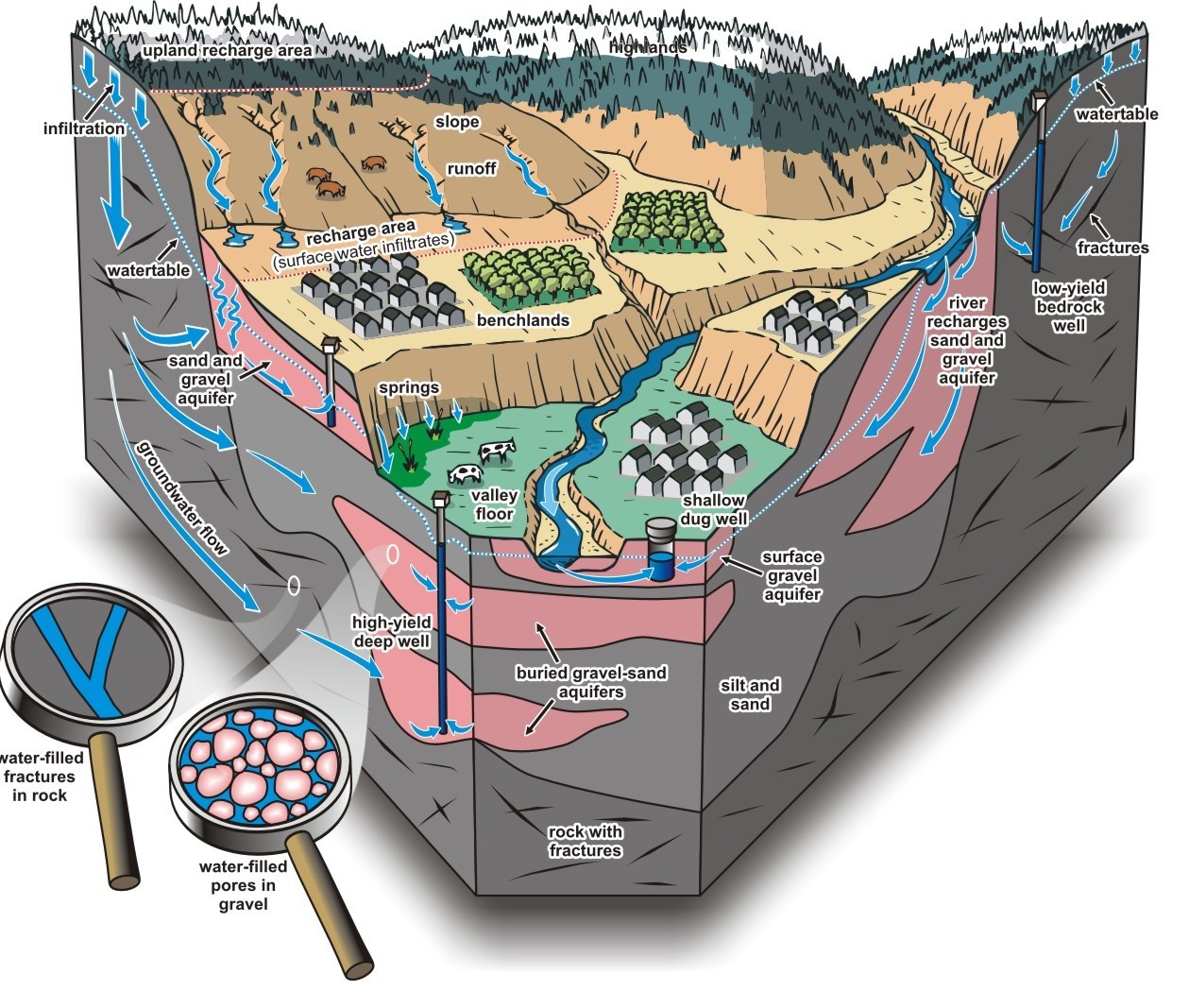
A cross section of Okanagan aquifers, from the Okanagan Waterscape Poster ( see: www.obwb.ca/okanagan_waterscapes).

Hands shot up at the end of the talk, launching into a public discussion on natural resources.  Rather than fish and riparian restoration, the Naturalists wanted to talk about water agreements with the Americans, Okanagan population growth, and water law.

One woman in the third row, stood up and said, “What’s wrong with us? When are we ever going to regulate groundwater?”  While I don’t like to put a too positive spin on it, it felt good to say – “Water policy is slow to change, but I believe we will have this legislation in place in the next few years.” Right now, BC is reforming the century-old Water Act into the new Water Sustainability Act, and although we can debate the details, groundwater is one reason to rally behind getting it done. Continue reading

Share

Building Bridges for Okanagan Water in 2012

Start by doing what’s necessary; then do what’s possible; and suddenly you are doing the impossible.” -St. Francis of Assisi

Welcome to 2012.  It is almost 5 months since I began this blog, “Building Bridges,” and the new year, when we traditionally look back and look ahead, seems like a good time to reflect on the message and purpose of these regular Okanagan Water updates.  A novice blogger, I’ve been learning a lot – talking to veterans of social media, water enthusiasts, and my select and devoted readership.

This Christmas was spent with friends at a boat-in cottage - after a thrilling lake crossing. Beautiful, but cold

If there is anything I’d like people to take away, it is the conviction that in a time of change, we have the power to work together and solve water issues as they arise. There are pockets of real problems in the valley, especially with groundwater, and many potential future challenges with climate change, but with planning and collaboration we can avoid severe crises. Starting with what’s necessary, and then carving off what’s possible, we can begin to tackle what now might seem insurmountable. Continue reading

Share

It’s like money in the (snow)bank

Sunshine is delicious, rain is refreshing, wind braces us up, snow is exhilarating; there is really no such thing as bad weather, only different kinds of good weather.” – John Ruskin
 
Yesterday in Kelowna, I saw a woman standing on the sidewalk, all decked out in ski gear – boots and skis on.  It was dark, and there was no snow.  I don’t have an explanation, just to say, many people move here for the winter sports.

Snow in the Okanagan - it's not just for skiiers.

 
If you aren’t a skier, and your winter experience involves driving around, fighting the elements, snow seems like a terrible bother.  I won’t post the picture of my totaled Toyota on the Coquihalla.  Whether you love it or not, I’d argue that snow is even more important to the Okanagan in the summer than the winter. 
 
Think of snow as a giant, slow-release water reservoir.  Most of the planning and infrastructure changes we need for adapting to climate change involve ways to adapt to changes in snow cover. Less snow means less skiing, less boating, less wine, less apples, less cherries and most other things we hold dear.  Continue reading
Share

No vacation in the Salmon Nation

All men are equal before fish.” – Herbert Hoover

Last week, I attended a workshop in Portland, Oregon, on the future of salmon under climate change.  Our delegation had been invited to talk about the resurgence of sockeye in the Okanagan River, and our experiences with collaboration. Scientists, managers, fishers, First Nations, and other friends of fish, gathered from around the north Pacific to talk about good news, bad news, and what’s possible. It was a diverse group from far-flung geography,  bound together by the need to manage salmon under rapidly changing conditions.

And while much of the conversation was focused on science, there was an important thread about values. What we protect and care for depends strongly on what we value as communities.

While there is uncertainty about the impacts of climate change in specific salmon areas, almost all models project the same outcome: warming waters, summer and winter. Warmer summer waters interfere with spawning, rearing, and migration – and can lead to fish kills in oxygen-poor water.  Warmer waters in winter (particularly in the ocean) could expand the range of salmon to the north as the sea ice breaks up; but this wouldn’t replace the loss of salmon to southern ecosystems and communities. Continue reading

Share